


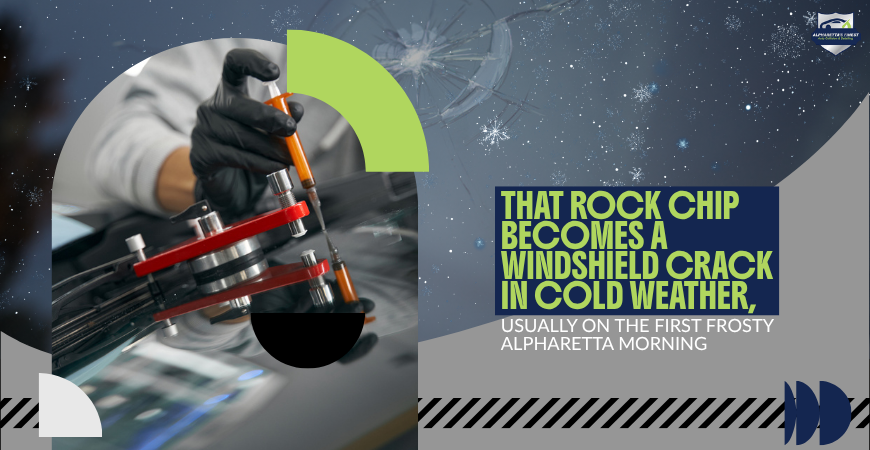
Most cases of a windshield crack in cold weather begin as a chip the driver has been looking past for weeks. The glass around a chip is already broken at the surface, so it carries stress unevenly. Put a hard frost on the outside and a defroster on high against the inside, and that uneven stress finally has somewhere to go, which is usually straight out from the edge of the chip. In Alpharetta the first frosty mornings usually arrive by November, right as holiday traffic thickens on GA-400 and I-85. Fix it while it’s small. Alpharetta’s Finest Auto Collision & Detailing repairs windshield chips and small cracks at its shop on Nine McFarland Drive before the weather turns.
Quick Summary: Key Takeaways
- Cold finds the weak spot: fast temperature swings put the most stress on the edges of an existing chip.
- The defroster is the usual trigger: hot air on frozen glass warms one surface faster than the other.
- Frost season is close: the National Weather Service puts Atlanta’s average first freeze on November 13.
- A repair is quick: a resin fill on a minor chip typically takes 30 minutes to an hour.
Why a Windshield Crack Spreads in Cold Weather
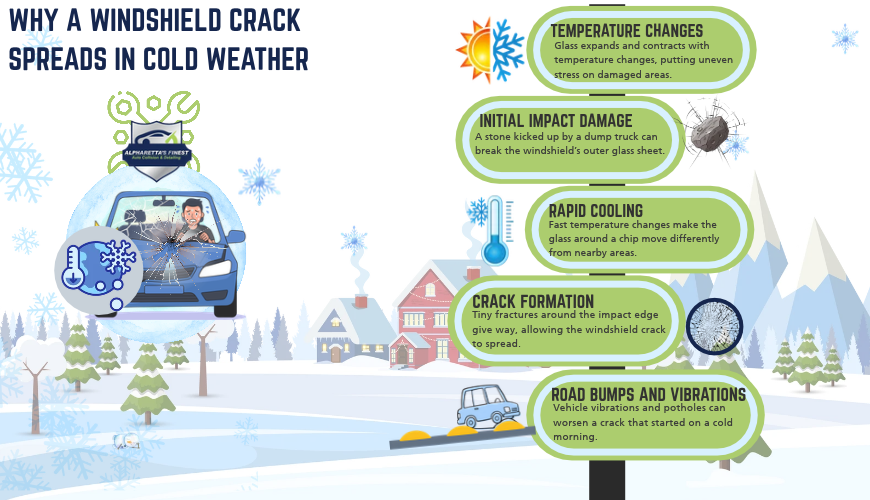
Cold spreads a chip because glass expands and contracts as it heats and cools, and damaged glass can’t do that evenly. Every windshield is two sheets of glass with a clear plastic layer bonded between them. So a stone kicked up by a dump truck only has to break the outer sheet.
When the temperature swings fast, the glass around the chip moves at a different rate from the glass a few inches away, and the tiny fractures at the edge of the impact give first. That’s the crack starting. Bumps and vibration add to it. Then a pothole on Old Milton Parkway finishes what a 28-degree morning started.
North Fulton’s First Freeze Lands in Holiday Driving Season
Frost and holiday traffic arrive together. The National Weather Service office for Atlanta lists November 13 as the city’s average first freeze, meaning the first night at 32°F or lower, and the earliest on record came on October 11, 1906. Across the region, the same office puts the average first freeze anywhere from mid-October in northeast Georgia to mid-November in central Georgia, and north Fulton sits between the two.
October’s I-85 chips meet frost within weeks. Then come Thanksgiving trips and the run into the holidays, with more highway time behind trucks. Storms do their share too. Hail can leave stress cracks and edge chips that aren’t obvious at first, and a cold snap works on those just as it works on a fresh rock chip.
Morning Habits That Keep a Chip From Running
Go slowly on frosty mornings. Start the car and run the defroster on a low setting for the first few minutes instead of cranking it to full heat, so the glass warms gradually from the inside out. Never use hot water. A kettle poured over frozen glass delivers exactly the sudden temperature jump that makes a chip run.
Scrape gently around the chip, too. Until it’s repaired, a strip of clear tape over the spot keeps dirt and moisture out of the break, which is what the shop recommends the moment you notice damage.
Clean, treated glass helps on the wet days in between. The detailing side of the shop offers windshield treatment that makes rain bead and run off, so you see the road better at dusk on Haynes Bridge Road.
Which Chips Can Still Be Repaired
Size and position decide it. A small chip, or a short crack well outside the driver’s view, is the kind a resin fill handles, and the glass stays strong afterward. A crack that has already lengthened or opened up is past that point.
Edges deserve their own warning. Stress cracks can start along the edge of the windshield with no rock involved at all, from body flex or uneven pressure on the glass, and they creep inward as the seasons change. Don’t wait on edge chips.
Close inspection catches it early. During an exterior detail, technicians go over the whole surface of the car, which is exactly when deep rock chips tend to get noticed before they grow.
How Alpharetta’s Finest Repairs a Chipped Windshield
The repair fills the break with a clear resin that bonds to the glass, and once it cures the chip stops spreading and the windshield holds its shape. For minor damage the job usually runs about 30 minutes to an hour.
Estimates are free. There’s a 24/7 drop-off key box if you’d rather leave the car on the way to work, and shuttle rides if you need one. The shop is also deliberately not a direct-repair shop for any insurer. That matters if you’re filing a claim, because the owners chose to work for the customer, show what the insurance company approves, and explain every step.
Frequently Asked Questions
Q: Will a windshield chip spread in cold weather?
A: Often, yes. Cold on its own isn’t the problem; the sudden change is. When a frozen windshield meets a hot defroster, or a warm cabin meets a freezing night, the damaged spot takes uneven stress, and that’s when chips run.
Q: Is it OK to use the defroster with a chipped windshield?
A: Yes, but start it low. Let the glass warm for a few minutes before you raise the temperature, and keep the vents from blasting full heat straight at a cold windshield.
Q: Can I pour warm water on a frozen windshield?
A: Skip it. Even warm water on frozen glass creates a sharp temperature difference, and with a chip already in the glass that’s a real risk. Use the defroster and a plastic scraper instead.
Get the Chip Filled Before the Frost Gets to It
Check it in daylight first. Note roughly how big it is, whether any lines run out from it, and whether it sits in your line of sight, then add those notes to the appointment form on alpharettasfinest.net. Mornings are tight for most commuters, so the 24/7 key box at 4075 Nine McFarland Dr, Suite C, Alpharetta, GA 30004 takes the keys whenever you pass.